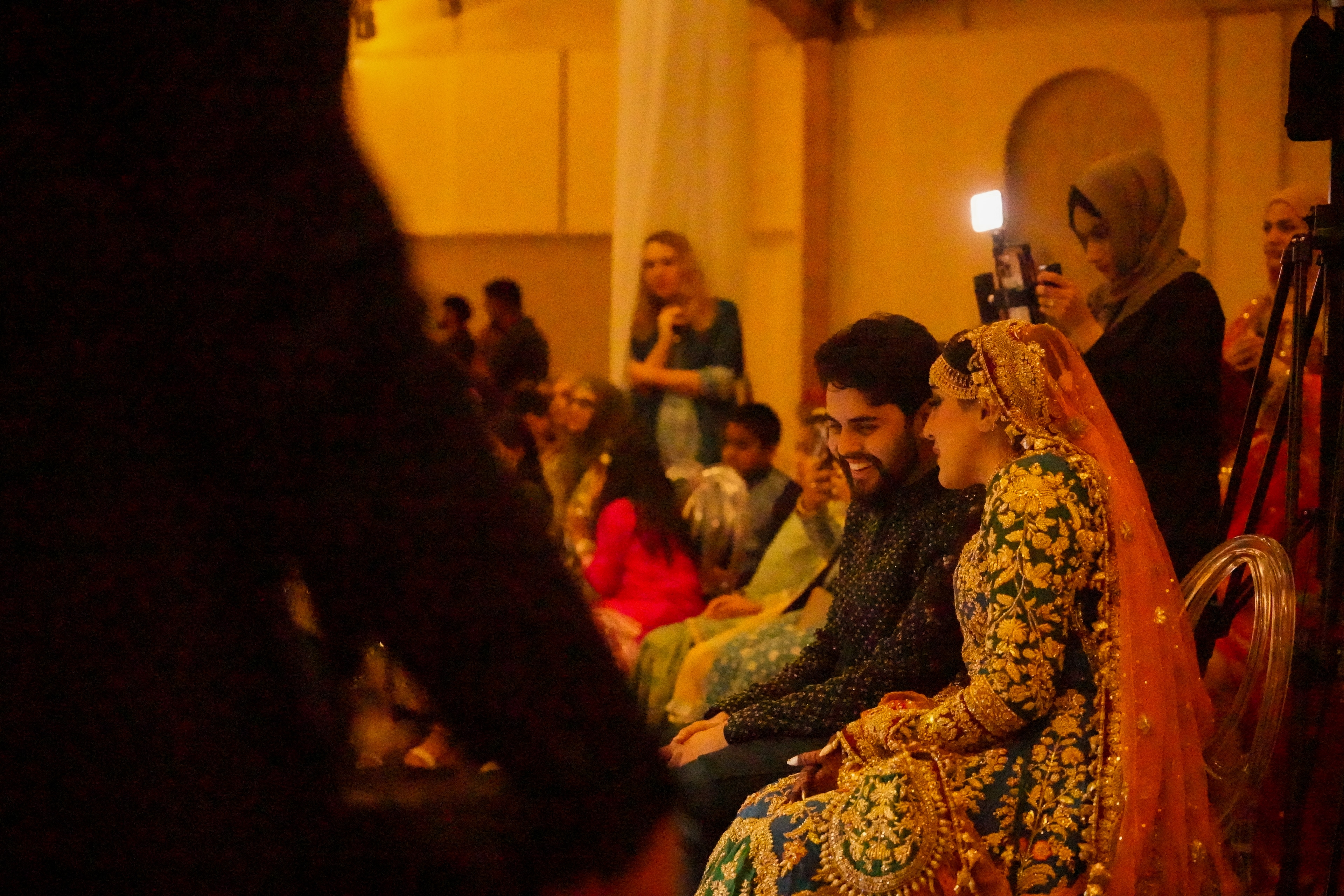
Why we choose 35mm film for maritime wedding documentation — and what grain, limitation, and physical media bring to the art of documenting love.
The Question Everyone Asks
"Why film? Digital is sharper, faster, and cheaper."
All true. And all missing the point.
Film isn't about technical superiority. It's about emotional truth. The question isn't whether film produces better images — it's whether film produces different images. And for the kind of work we do, different is everything.
What Film Does That Digital Can't
Grain as Memory
Film grain is not noise. Noise is a defect — random, ugly, something to be reduced. Grain is structure. It's the physical crystalline architecture of silver halide crystals responding to light. Every grain pattern is unique, organic, and irreproducible.
But here's the thing about grain that no technical review will tell you: grain looks like memory.
When you look at a photograph from your childhood — a real photograph, printed on paper — it has a quality that digital images lack. It's softer, warmer, slightly imperfect. It feels like the past.
Film grain produces that same quality in-camera. A wedding photographed on film doesn't look like it was taken today. It looks like it was always going to be remembered this way — warm, textured, slightly distant, like a story you've been told so many times it's become myth.
That's what couples are buying when they choose film. Not sharpness. Not resolution. They're buying the feeling that their wedding day has already become a legacy.
The Atlantic Coast on Film
The Maritime coastline and 35mm film were made for each other. Here's why:
Humidity and diffusion. The Atlantic coast's high humidity (often 80-95%) creates natural atmospheric diffusion. Film responds to this diffusion organically — the emulsion captures the haze, the mist, the soft quality of Maritime light in a way that digital sensors flatten and correct.
Color temperature shifts. Coastal light changes constantly — warm to cool, golden to silver, sometimes within minutes. Film embraces these shifts. Digital tries to neutralize them. On a Maritime wedding day, those color temperature shifts are part of the story. Film tells it. Digital edits it.
The silver in the water. There's a quality to Atlantic light — a cool, luminous silver — that renders extraordinarily well on film. Portra 400 captures it with warmth. Tri-X captures it with drama. Digital sensors see it as "incorrect white balance" and try to fix it.
The Discipline of 36 Frames
A roll of 35mm film gives you 36 exposures. A wedding day might demand 300, 500, or more images. This means every single frame on film has to earn its place.
This constraint changes everything about how I work:
I think before I shoot. Not "let me burst through this moment and pick the best one later" — but "what is the one frame that captures this?" This intentionality produces images that are considered, composed, and deliberate.
I wait for the moment. With unlimited digital frames, the temptation is to shoot continuously and hope something good happens. With film, I wait. I watch. I let the moment come to me. And when it does, I'm ready.
I'm present. You can't chimp a film photograph. You can't check the histogram, review the image, and reshoot. You have to trust your eye, your instincts, and your relationship with the light. This forces a level of presence that digital shooting actively discourages.
Our Film Workflow for Weddings
What We Shoot
Ceremony and portraits: Portra 400. The gold standard for wedding film. Warm skin tones, forgiving exposure latitude, beautiful highlight roll-off. It makes everyone look like they're glowing from within.
Reception and low light: Digital. I'm not a purist. When the lights go down and the dance floor fills up, we switch to digital. Modern sensors at ISO 6400 produce clean images that film simply cannot match in low light.
Details and landscapes: Ektar 100. For the rings, the dress, the venue, the landscape — Ektar's saturation and sharpness produce images that feel like postcards from a place you've never been but always wanted to visit.
The Hybrid Advantage
We don't choose between film and digital. We use both, strategically:
Film for the emotional core. Ceremony, portraits, first look, family moments — these are the images that will hang on walls and live in albums. They deserve the organic, timeless quality of film.
Digital for the documentary record. Reception, dancing, candid moments, low-light situations — these images complete the story. They're important, but they don't need the same aesthetic weight.
The result is a wedding gallery that has both the warmth of memory and the completeness of documentation. The best of both worlds.
The Archive Argument
Here's the practical reason to care about film: longevity.
A film negative, stored properly, lasts 100+ years. It doesn't need a hard drive, a cloud subscription, or a software update. It's a physical object that contains all the information needed to reproduce the image at any point in the future.
Your digital wedding photos exist as files on a server. Servers fail. Formats become obsolete. Cloud services shut down. I've had clients come to me five years after their wedding unable to access their original files.
Your film negatives will outlive you. They will outlive your children. They are the most durable visual record you can create.
What This Means for Your Wedding
When you book us for your wedding, here's what the film commitment means for you:
Fewer images, better images. We deliver fewer total photographs than a digital-only shooter would. But the percentage of keeper images is dramatically higher. Every image we deliver was chosen before the shutter was pressed.
A different aesthetic. Your images will have warmth, texture, and a quality that no digital filter can replicate. They will look like they belong to a tradition — because they do.
A physical archive. You receive not just digital files but scanned negatives. The originals exist as physical objects. They can be rescanned at higher resolutions in the future as technology improves.
The Grain of Time
There's a reason we call this "the grain of time." Film grain is the physical record of light hitting silver. It's the material evidence that a moment happened, that light existed, that someone was there to catch it.
Digital pixels are data. Film grain is matter.
When you look at a film photograph of your wedding day fifty years from now, you won't be looking at data. You'll be looking at the actual light from that day, captured in silver and gelatin, preserved in grain.
That's not nostalgia. That's physics.
And it matters.
Akshay Kumar shoots primarily on Portra 400 and Tri-X 400 for wedding work at Akshay Kumar Studios. His film workflow has been refined over a decade of Maritime wedding documentation.